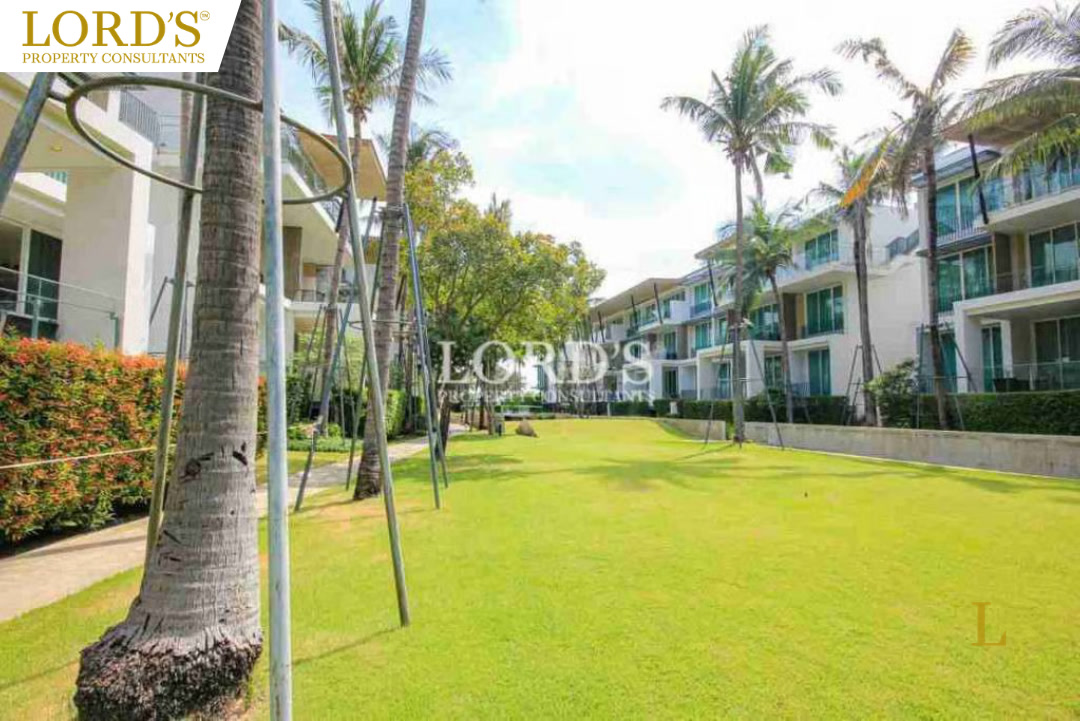
Golf Course Condos in Hua Hin: The Freehold Buyer's Guide
Hua Hin’s golf estates are one of the few places in Thailand where a foreign buyer can look out over a fairway and still hold the title in their own name. The route is the golf course condo, not the pool villa next door. Getting it right comes down to three checks: whether the building has foreign quota left, how your money arrives in Thailand, and what the seller still owes the building. Here is how each one works on Hua Hin’s golf estates, and where buyers most often go wrong.
Key takeaways
Foreigners can own a golf course condo freehold in their own name; golf villas on the same estates cannot be freehold for foreigners.
The 49% foreign quota is measured by floor area per building, so small low-rise golf blocks can run out fast.
The full price must arrive from abroad in foreign currency, with the condo named as the purpose of the transfer.
“Company-held Thai quota” listings can hide a nominee structure, which the Condominium Act makes a criminal offence.
A golf membership is a contract with the club, not part of the title, so confirm it in writing before paying for it.
Can foreigners buy a golf course condo in Hua Hin freehold?
Yes. A foreigner can own a golf course condo in Hua Hin freehold, in their own name, provided the building still has foreign quota and the full purchase price arrives from abroad in foreign currency.
The legal basis is the Condominium Act B.E. 2522, which lets a foreigner own a unit when they bring foreign currency into Thailand, withdraw from a non-resident baht account, or pay from a foreign currency deposit account. The unit comes with its own condominium title deed, registered at the Land Office, and you hold a share of the common property such as the land, gardens and pool.
That matters on Hua Hin’s golf estates because most of the housing around Black Mountain, Palm Hills, Pineapple Valley (formerly Banyan), Springfield and Majestic Creek is villas. A foreigner cannot hold land freehold, so a villa on the same fairway is bought through a lease, as explained in our guide to leasehold vs freehold in Thailand. The golf condo is the one format on these estates where a foreign name can sit on the deed.
How does the 49% foreign quota work in a golf condo building?
Foreign ownership in each registered condominium is capped at 49% of the total area of all units, counted in square metres rather than unit numbers. In a small low-rise golf building, a handful of large foreign-owned units can fill the entire quota.
The cap sits in Section 19 bis of the Condominium Act, which measures the 49% against the area of every unit at the time the building was registered. The remaining 51% is Thai quota. A Thai owner can always buy a foreign-quota unit, but a foreigner can only take a Thai-quota unit if the building has enough foreign space left to absorb it.
Golf condos are usually low-rise blocks with generous units, often well over 100 square metres with wide terraces facing the course. Take a building with 3,000 square metres of total unit area. The foreign cap is 1,470 square metres, so nine foreign-owned units of 150 square metres each use 1,350 square metres, and a tenth would breach it. In a city tower of studios, the same quota would stretch across dozens of owners.
Estates with several condo blocks register each building separately, so one block can be full while the next has space. Never assume quota from what you heard about the estate as a whole.
Ownership route for a golf condo
Foreign-quota freehold
Thai quota held by a company
Leasehold unit
Name on the title
You, as the foreign owner
The Thai company
The Thai or foreign owner; you hold a registered lease
Legal basis
Condominium Act, Sections 19 and 19 bis
Lawful only if the company is genuinely Thai and not holding for a foreigner
Civil and Commercial Code lease, registered at the Land Office
Proof of foreign funds
Required for the full price
Not required, which is part of the risk
Not required
Resale and sending money home
Strongest; FET documents support repatriation
Depends on the company; difficult to explain to a bank
Limited to the remaining lease term
Risk level
Low
High if nominee
Medium
How do I check if a golf condo still has foreign quota?
Ask the condominium juristic person for a written letter confirming the building’s current foreign ownership ratio. Get it before paying a deposit, and have it reissued for transfer day, because the Land Office registers against the quota as it stands on that date.
The juristic person is the legal body that runs the building, and its letter is the document the Land Office accepts. A seller’s word, an old listing or a note on a portal saying “foreign quota available” is not evidence. The letter should name the building, state the total unit area, the area already in foreign hands, and the space remaining.
Timing is the trap. Quota is first come, first served at the Land Office, so a unit that qualified when you reserved it can lose out if another foreign buyer registers first in the same block.
From my experience
On golf estates I request the quota letter before a buyer pays anything. In a small golf building, one large unit changing hands can move the numbers more than buyers expect, so I make sure the reservation agreement says the deposit comes back in full if a foreign quota letter cannot be issued for transfer day. If a seller refuses that clause, it usually tells you how confident they are about the quota. The rest of the contract deserves the same attention, so go through what to check in a Thai property sales agreement before you sign.
Is a “company-held” or Thai-quota golf condo safe to buy?
A Thai company holding a unit on behalf of a foreigner is a nominee structure, which the Condominium Act makes a criminal offence. A Thai-quota golf condo is safe only if the building has spare foreign quota and the unit is registered to you as foreign freehold.
Golf condo listings around Hua Hin regularly describe units as “company held Thai quota” or “Thai quota, foreign quota available”. The second is often fine: it means the seller holds Thai quota, and the unit can move into the foreign quota if you bring in foreign funds and the building has room. The first needs a much harder look.
Under Section 67 of the Condominium Act, anyone holding a unit on behalf of a foreigner faces up to two years in prison, a fine of up to 20,000 baht, or both, and the unit can be ordered sold. Buying the company’s shares does not cure the problem; it can make you part of it. Our guide to buying Thai property through a company sets out where the legal line sits.
From my experience
When I see “company held” on a golf condo listing, my first question is who owns the company’s shares and why it was set up. If the answer leads back to a foreign owner, I advise the buyer to treat the lower price as the cost of a problem rather than a bargain, and to ask whether the unit can be converted into foreign quota before transfer. Units described as “leasehold, price includes freehold” need the same care: confirm exactly which title will be registered in your name on transfer day, and in which quota. For more warning signs, read how to avoid property scams in Thailand.
How must I transfer the money so the Land Office registers my golf condo?
Send foreign currency from an account abroad to a Thai bank, state the condominium purchase as the purpose, and let the Thai bank convert it into baht. The bank issues a Foreign Exchange Transaction (FET) form for USD 50,000 or more, or its own certificate for smaller amounts.
The Thai government’s guide on stating the purpose of the transfer sets out the wording to put on your bank’s transfer form: “For Purchasing Condominium”, the name of the condominium, the unit number and your full name. Name the golf estate project exactly as it appears on the title, not the golf club’s marketing name. The Act requires that the foreign currency brought in is not less than the sale price, so send slightly more than the contract figure to cover bank charges.
Three practical points for golf condo buyers:
Use a bank SWIFT transfer for the condo payment. Money apps suit small transfers, but it is not certain every app transfer produces proof the Land Office will accept for a foreign freehold condo.
Keep every document for every tranche. Resale golf condos are often paid as a deposit plus a balance, and each payment needs its own FET form or bank certificate.
Store the originals safely. When you sell, your bank will want them before it lets the sale proceeds leave Thailand.
Budget for three layers beyond the price: Land Office fees and taxes at transfer, the juristic person’s sinking fund and advance common fees for new owners, and monthly common fees charged per square metre. Because golf condo units are large, monthly fees scale up with them.
Transfer fees and taxes are set by the Land Department and depend on the government appraised value and how long the seller has owned the unit. Temporary reductions have applied to some price bands, so confirm the rates in force on your transfer date; our breakdown of property taxes and fees in Thailand explains who usually pays what.
Common fees deserve more attention on golf estates than in town. Under Section 29 of the Condominium Act, the Land Office will not register a transfer unless the seller presents a debt-free certificate from the juristic person, and the manager must issue it within 15 days once arrears are paid. Owners who fall six months behind can face a surcharge of up to 20% a year and lose access to common services, so a seller in arrears is a delay waiting to happen.
Many golf condo buildings around Hua Hin date from the 1990s and 2000s. Ask for the last audited financial statement and the most recent general meeting minutes, which show whether roofs, pools or lifts are due for major work. Our guides on golf estate HOA and CAM fees in Hua Hin and the hidden costs of buying property in Thailand cover the rest of the running budget.
Does the golf club membership transfer with the condo?
Only when the golf club’s own rules allow it. A membership is a contract with the club, separate from the condominium title, so confirm transferability, transfer fees and benefits in writing from the club before it adds a single baht to your price.
Golf condo listings often promise that a “lifetime family membership follows the condo”. Sometimes the membership is tied to the unit and passes to each new owner. Sometimes it is personal to the original buyer and ends on sale, or transfers only after a fee. The Land Office registers the condo; it plays no part in the membership.
Has Thailand raised the foreign condo quota to 75%?
No. As of October 2026, the 49% cap in the Condominium Act still applies, and proposals to raise foreign ownership to 75% in selected zones have not been enacted. Price and plan any golf condo purchase on the rules in force today.
Proposals to lift the cap, along with longer lease terms, have circulated in Thai policy discussion since 2024. None has become law. Treat any listing or sales pitch built on a “75% quota” as a promise about the future, not a feature of the building, and buy only a unit that qualifies under the current rules. Our explainer on how property ownership works in Thailand sets out the structures that apply now.
Frequently asked questions about golf course condos in Hua Hin
Can I get a mortgage on a golf condo in Hua Hin?
Thai banks rarely lend to non-resident foreigners, and freehold registration still needs the full price to arrive from abroad in foreign currency. Most buyers pay cash or arrange finance in their home country and then remit the funds.
Can my Thai spouse buy the golf condo under Thai quota?
Yes, a Thai spouse can buy a Thai-quota unit in their own name, which avoids the foreign quota question entirely. The Land Office commonly asks the foreign spouse to confirm in writing that the money belongs to the Thai spouse, so read our guide to buying a condominium with a Thai spouse first.
Do I need a visa to buy a golf condo in Thailand?
No residence visa is needed to buy through the foreign currency route, because bringing foreign currency into Thailand is itself a qualifying ground under the Condominium Act. Your visa decides how long you can stay, not whether you can own, as covered in what visa you need to buy property in Thailand.
Can I rent out my golf condo when I am not using it?
Rentals of 30 days or longer are generally allowed, subject to the building’s own regulations. Daily and weekly rentals usually need a hotel licence and are banned by many juristic person regulations, so check the rules before you count on rental income.
What happens when I sell my golf condo?
You can sell to a foreign or Thai buyer, and a sale to a foreigner keeps the unit in the foreign quota. Your original FET forms or bank certificates support sending the sale proceeds back abroad, so keep them with your title deed.
Is a golf condo a good choice if I do not play golf?
Buying a golf course condo in Hua Hin: the bottom line
A golf course condo is the cleanest way for a foreigner to own property on a Hua Hin golf estate, with a title deed in your own name and a straightforward exit when you sell. The protection comes from doing three things in order: confirm the foreign quota in writing for the specific building, send the full price from abroad with the condo named as the purpose, and make sure the seller can produce a debt-free certificate. Treat golf memberships and “company-held” titles as separate questions to settle in writing before you pay.
If you have a golf condo at Black Mountain, Palm Hills or Pineapple Valley in mind, send me the listing and I will check its quota status, ownership history and common fee position before you commit. For the full step-by-step route, see the process of buying property in Thailand for foreigners.